- As per 2001 census, at least 92 different living languages are spoken in Nepal, though other studies list 123 living languages . Nepal’s linguistic heritage has evolved from three major language groups, namely, Indo-Aryan, Tibeto-Burman, and indigenous. The major languages of Nepal (percent spoken as mother tongue) are Nepali (49%), Maithili (12%), Bhojpuri (8%), Tharu (6%), Tamang (5%), Newari/Nepal Bhasa (4%), Magar (3%), Awadhi (2%), Bantawa (2%), Limbu (1%), and Bajjika (1%). The remaining languages are each spoken as mother tongue by less than one percent of the population, for example Dura. Nepali, written in Devanagari script, is the official, national language and serves as lingua franca among Nepalese of different ethno-linguistic groups. In the southern Terai Region, (5 to 10 mile wide stretch of flat plains, which is a northward continuation of Gangetic plains of India), Hindi is also spoken. Extinct languages of Nepal include Kusunda and Waling. Among notable Nepalese literary writers is Parijat.
Languages and literatures
Saturday, July 3, 2010

Dance and music
Legends state that dances in the Indian subcontinent originated in the abode of Lord Shiva - the Himalayas and the Himalayan Kingdom of Nepal where he performed the tandava dance. This indicates that dance traditions of Nepal are of very ancient origin. With altitudes and ethnicity, the dances of Nepal slightly change in style as well as in the dance costumes. Accompanying music and musical instruments also change in tune with the themes, which revolve around topics like harvesting of crops, marriage rites, war stories, a lonely girl’s yearning for her love, and several other themes and stories from everyday life in the villages.
Culture of Nepal
The rich cultural heritage of the Federal Democratic Republic of Nepal, has evolved over centuries. This multi-dimensional cultural heritage encompasses within itself the cultural diversities of various ethnic, tribal, and social groups inhabiting different altitudes, and it manifests in various forms: music and dance; art and craft; folklores and folktales; languages and literature; philosophy and religion; festivals and celebrations; and foods and drinks.
Contents[hide]
1 Dance and music
2 Languages and literatures
3 Religions and philosophy
4 Festivals and celebrations
5 Architecture and Archeology
6 Sport in Nepal
7 See also
8 External links

Contents[hide]
1 Dance and music
2 Languages and literatures
3 Religions and philosophy
4 Festivals and celebrations
5 Architecture and Archeology
6 Sport in Nepal
7 See also
8 External links

Art of Nepal
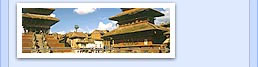
The art and architecture of Nepal is deeply influenced by the religion. Unique craftsmanship can be found in temples, architecture, shrines, fountains and the design of religious objects. Art and religion is so deeply interlocked that it is impossible to separate the one from the other. All art forms express both Hindu and Buddhist iconography.Buddhism in NepalBuddhism, the fourth largest religion all over the world, has strong roots in Nepal. Buddhism in Nepal dates from the birth of Siddhartha Gautama himself, therefore Buddhist influences are evident on the culture of Nepal. Nepal is the meeting point for Indian and Tibetan Buddhist traditions. Culture of NepalThe culture of Nepal is a assemblage of music, architecture, religion and literature. This mountain kingdom is multi-ethic and multi-lingual. The land is rich with unique cultural groups like Tharu,Yadav, Ahir, Newars and others. Food of NepalNepalese are great foodies and their food varieties are hot, spicy and nutritious. Newari and Thakali cuisines are the original taste of Nepal. Otherwise, Nepalese style of cooking has been influenced by Indian and Tibetan cooking. Dal Bhat tarkari is the staple food of Nepal. Meat curries and monos are the hot favorites among the tourists. Music of NepalThe rhythm, beats, bounce of Nepali traditional folk and classical music is spiritual enough to sooth you and entertaining enough to cheer you. Music is associated with every event in Nepal, then be it birth, marriage, festivals or national events. People of NepalThe people of Indo-Aryan community are the original inhabitants of Nepal. No wonder their descendents form the majority even now. Other major groups in Nepal are Gurungs and Magars who live mainly in the western region; Rais, Limbus and Sunwars who live in the eastern mid hills; Sherpas, Manangpas and Lopas who live near the mountains of Everest, Annapurna and Mustang respectively.Religion of NepalReligion in Nepal is not only a system of social coherence based on certain rituals and beliefs, rather it is the binding force that ties the mountain kingdom together. Though Nepal is famous, as the world's only Hindu Kingdom, equal respect is given to other religions as well. Buddhism is the second largest religion followed in Nepal, others being Tantrism, Islam and Christianity.
Explore the fascinating culture of Nepal
Nepal's culture is greatly influenced by its music, architecture, religion and literature. Your first sight of Nepal may leave you speechless, the great quantities of temples, churches, monasteries and other religious buildings, the hurly-burly in the streets and the number of people and animals socializing on every corner of the narrow cobble-stone lanes.
Nepal has about thirty-six different ethnic groups and multiple religions and languages. Its music is similarly varied, with pop, religious, classical and folk music being popular. Musical genres from Tibet and Hindustan have greatly influenced Nepalese music. Usually, women, even of the musician castes, do not play music except for specific situations, such as at the traditional all-female wedding parties.
Nepal has about thirty-six different ethnic groups and multiple religions and languages. Its music is similarly varied, with pop, religious, classical and folk music being popular. Musical genres from Tibet and Hindustan have greatly influenced Nepalese music. Usually, women, even of the musician castes, do not play music except for specific situations, such as at the traditional all-female wedding parties.

The architecture of Nepal is another art that has become an important part of the country's culture. Nepal's architecture can be divided into three broad groups, the stupa style, the pagoda style and the shikhara style.
Nepal is constitutionally a Hindu kingdom with legal provisions of no prejudice against other religions. The Hindu inhabitants in the country has been constantly over 80 percent since the 1950s. The second largest religion of Nepal is Buddhism, it is practiced by about 11 percent, while Islam comprises of about 4.2 percent of the population. The Kirat religion makes up nearly 3.6 percent of the population.
Nepal has many customs and beliefs that might be difficult to understand and not so easy to obey but this is the way of life to them and you should respect it when you are in their territory.
Do not feel offended if any Nepalese hesitates to shake hands with you because it hasn't been very long since the western traditions were introduced to them. Most Nepalese greet one another by a “Namaste”, a common act done by putting the palms together in a prayer like gesture.
It is customary to eat and deal with food with your right hand. They use their left hand to wash themselves after being to the toilet. Note that most Nepalese eat with their hands, forks and spoons are not very common.
Note that men and woman should always dress appropriately. Men should not walk or trek bare-chested, shorts are acceptable but it's recommended to rather wear long pants. Women are recommended to wear long skirts that cover the ankles, because exposure of a woman's legs can draw unnecessary attention.
Showing affection between men and woman in public is not acceptable. So avoid kissing, hugging, cuddling or even holding hands in public.
Working for Health Equity in Rural Nepal
Nyaya Health operates a hospital and mobile medical care services in Achham, a large district in Nepal. Achham is one of the poorest regions in South Asia, and shoulders some of the world’s highest mortality rates, particularly among women. Following a decade-long civil conflict, the health infrastructure of the region has been ravaged. Nyaya provides essential primary care to the region, as requested and directed by community members. We work in partnership with local government officials as part of an initiative to rebuild the public sector health system. We construct healthcare infrastructure, train local health workers, and provide direct medical services. Our organization employs an all-Nepali staff with supervision and training from volunteer public health experts. We maintain an “open source” approach involving complete transparency in our expenditures, operations protocols, and clinical outcomes, which are detailed on this website.
Subscribe to:
Posts (Atom)